Because the best hikes start long before you reach the trailhead.
Whether you’re heading out for a peaceful walk through the woods or tackling a full day on the trail, a little preparation goes a long way. One of the best lessons we’ve learned is that hiking doesn’t have to be complicated—but it does require a little planning.
We’ve forgotten sunscreen before. We’ve underestimated how much water we’d need. We’ve definitely had those “I wish I had packed…” moments.
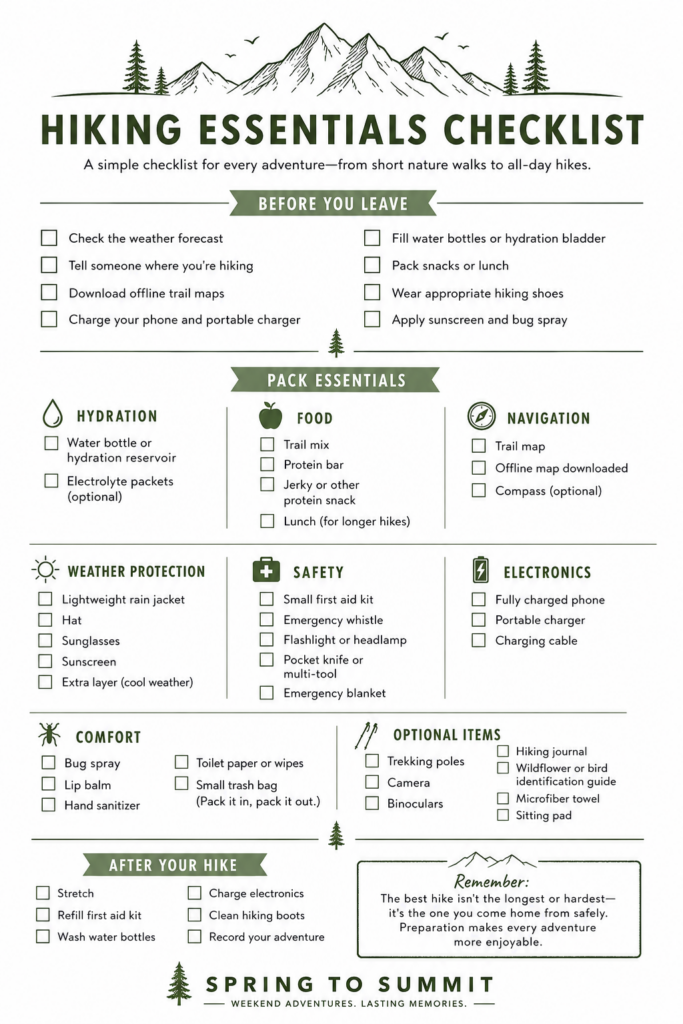
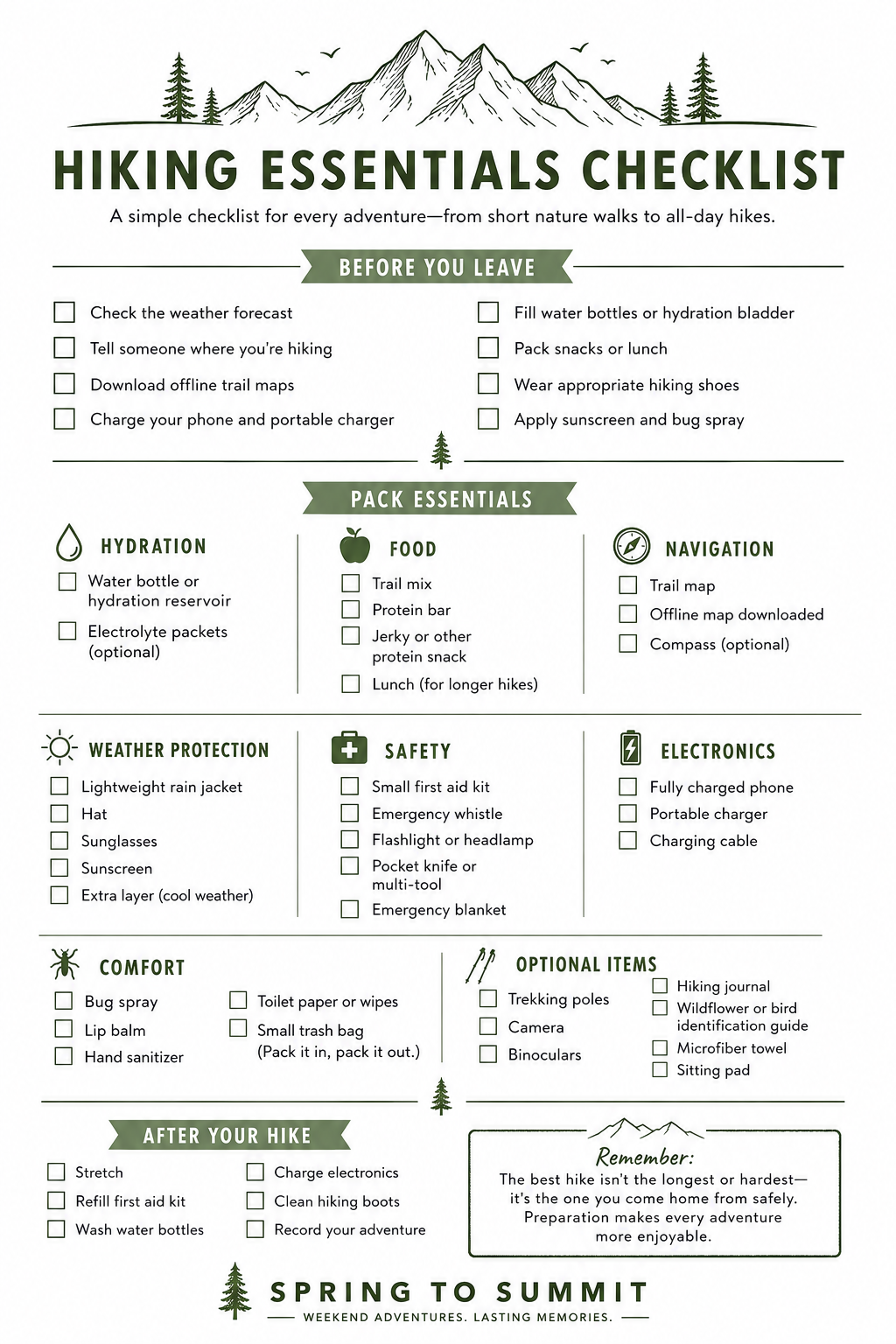
That’s exactly why we created this Hiking Essentials Checklist.
It’s a simple printable that helps make sure you’ve packed the basics before every adventure, so you can spend less time worrying and more time enjoying the trail.
Before You Leave
The adventure starts before you lace up your boots.
Taking just a few minutes to prepare can make the difference between a relaxing day outside and an unexpected headache. Checking the weather helps you dress appropriately, downloading trail maps gives you peace of mind if cell service disappears, and letting someone know where you’re hiking is one of the easiest safety precautions you can take.
Don’t forget the simple things, either—fill your water bottles, charge your phone, and toss a few snacks into your backpack before heading out the door.
Pack the Essentials
Every hike is different, but there are a few items that earn a permanent spot in our daypacks.
Stay Hydrated
Water is non-negotiable.
Even on shorter hikes, you’ll likely use more water than you expect, especially during warmer months. We always carry plenty of water, and on longer hikes it may be a good idea to pack electrolyte packets for an extra boost.
If you’re debating whether you’ve packed enough water, bringing a little extra is almost always the right choice.
Bring Snacks
Fresh air has a funny way of making you hungry.
Protein bars, trail mix, beef jerky, fruit, or sandwiches are all great options depending on how long you’ll be out. Keeping your energy up helps you enjoy the hike from start to finish.
Know Where You’re Going
Many hiking trails have little or no cell service.
Downloading an offline trail map before leaving home can save a lot of stress later. While many hikers also carry a compass, simply having an offline map is a great first step for beginners.
Be Ready for Changing Weather
Mountain weather loves surprises.
A sunny morning can quickly turn into afternoon rain or cooler temperatures at higher elevations. A lightweight rain jacket, sunscreen, sunglasses, and an extra layer don’t take up much room, but you’ll be glad you packed them when conditions change.
Don’t Skip the Safety Gear
Hopefully you’ll never need your first aid kit—but you’ll be thankful it’s there if you do.
A small kit, emergency whistle, flashlight or headlamp, multi-tool, and emergency blanket don’t add much weight, but they can make a big difference when unexpected situations happen.
We like to think of these as “hopefully never” items. You pack them because you hope you won’t need them.
Keep Your Electronics Ready
Most of us rely on our phones for navigation, photos, and emergency communication.
Starting with a full battery and carrying a small portable charger is one of the easiest ways to stay prepared.
Bonus: you’ll never have to choose between taking one more waterfall picture and saving battery life.
Don’t Forget the Little Things
Some of the smallest items in your backpack often become the most appreciated.
Bug spray, lip balm, hand sanitizer, toilet paper or wipes, and a small trash bag barely take up any room but can make your hike much more comfortable.
And always remember the Leave No Trace principle: if you pack it in, pack it out.
Optional Gear
As you hike more, you’ll probably discover a few favorite pieces of gear that always seem to make the trip better.
Trekking poles can add stability, binoculars help you spot wildlife, and a camera lets you capture the views. Some hikers even enjoy bringing a small journal to record memorable trails or wildlife sightings.
The beauty of hiking is that your gear can grow with your experience.
After the Hike
Reaching the trailhead isn’t quite the end of the adventure. Taking a few minutes to recover now—and reset your gear later—helps you feel better after your hike and makes it easier to hit the trail again next time.
Immediately After Your Hike
Before you jump in the car or head home, take a few minutes to take care of yourself.
Stretch your legs, drink plenty of water, and have a snack if you need one. Refueling after a hike helps your body recover, especially after longer or more challenging trails. It’s also the perfect time to sit back, enjoy the view one last time, and appreciate another day spent outdoors.
Once You’re Home
Now it’s time to get your gear ready for the next adventure.
Wash your water bottles or hydration reservoir, clean the dirt off your hiking boots, and restock anything you used from your first aid kit or snack stash. Spending just a few minutes resetting your gear now means you’ll be ready to head out the door when the next adventure calls.
Preparation Makes Every Adventure Better
One of the biggest misconceptions about hiking is that you need expensive gear or years of experience to enjoy the outdoors. The truth is, most great hiking days come down to being prepared.
Packing enough water. Bringing a snack. Checking the weather. Wearing the right shoes.
Those simple habits make your hikes safer, more comfortable, and a whole lot more fun.
Whether you’re taking your very first hike or your hundredth, preparation helps you enjoy the journey with confidence. Because the best memories aren’t made worrying about what you forgot—they’re made out on the trail.
Until next time, keep exploring—one trail, one weekend, and one adventure at a time.